
GRAND CENTRAL STATION
After a superb few days in New Jersey the Manhattan sky line beckons. It’s been nine years since I’ve walked these pavements and it’s all here just as if the city had been waiting for my return. This time I’m with my American friend Jo. We make for Grand Central Station to rendezvous with my Grandson who has been teaching here at a New York Summer Camp.

Grand Central Station
This New York rail station is a major commuter terminal. During rush hour periods it’s extremely busy. When we arrive on Monday at midday there is just a quiet bustle of travellers moving through the impressive concourse on their onward journeys to who knows where. Located in Midtown Manhattan, the terminal was originally built to serve the New Haven lines, the Metro-North Railroads, Harlem and Hudson and the Long Island Railroad. Built in 1871 by the famous magnate Cornelius Vanderbilt, the project was criticised for being outside the confines of already developed areas of the city. Vanderbilt commissioned John B Snook’s to design the structure. His final design was in the style of Second Empire architecture, a style that took its inspiration from the very grandiose 17th Renaissance Baroque and Gothic that had been sweeping across Europe and the Atlantic since the 17th century. It is said that Emile Zola described it as “the opulent bastard child of all the styles”. So, think Napoleonic grandeur and that was Grand Central. Zola, would be pleased to know that the building was eventually torn down as the city’s population, rail and trade links increased. Rebuilding began in 1904. The station would have two track levels and a huge main concourse. There would be several entrances and a post office . Most spectacular was the construction footprint which would span an incredible 19 blocks. With it’s vaulted ceiling impressive stairs leading up to the second level, the station still borders on the grandiose. In fact in the movie Men In Black the operatives have their headquarters hidden in a secret location connected to the station.
The new terminal was opened on 2nd February 1913. From the success of the station grew Terminal City, a busy commercial and business district built on the ground where once had been rail tracks. This had the effect of making the value of land along Park Avenue soar. The Chrysler Building now stands on this exclusive parcel of land as does many exclusive hotels and apartments. After a refurbishment, in 2014, the main entrance located on 42 Street was renamed the Jacqueline Kennedy Onassis, Foyer.
But Did You Know?
The Mole People
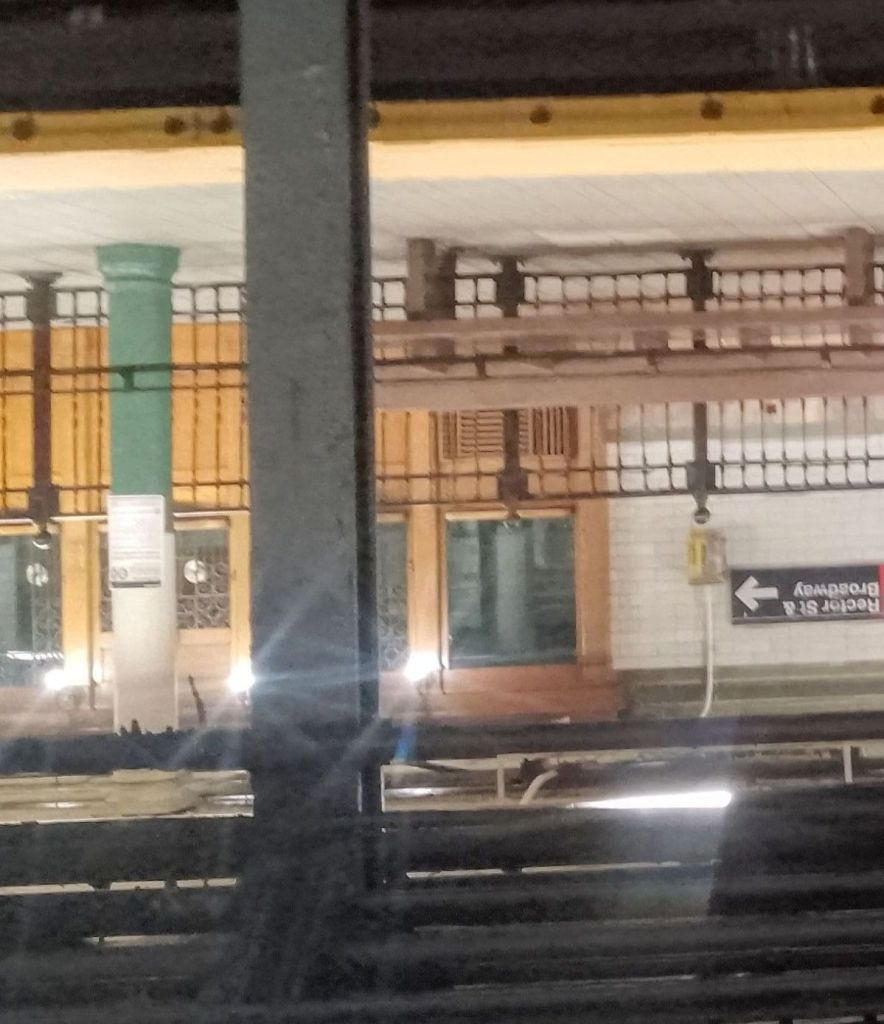
Thousands of people hurry through Grand Central’s concourse every day and many more visit to take photos of the iconic architecture. Step outside and the city offers up its wealth of impressive skyscrapers, fancy hotels and restaurants on 5th Avenue and Park Avenue. Luxury stores huddle shoulder to shoulder with souvenir shops, diners and bohemian cafes. But, below ground is quite a different story. Once upon a time, not so long ago in fact, abandoned passages, old rail tracks and underground tunnels running beneath the station were home to many dozens of homeless people known as the Mole People.
Homeless people were known to find refuge in the vast network of old tracks and tunnels. Some of the tunnels are believed to date back to the 19th century when the first Grand Central was built. For the homeless living on the streets of New York during bitter winters and broiling summer pavements, the underground tunnels provided safety, shelter and a sense of community. Believe it or not the Moles made homes for themselves in the abandoned passage ways by scavenging old furniture and bedding from dumpsters around the city. Home sweet home! By the 1990s in a bid to ‘clean’ up Midtown Manhattan, the authorities blitzed the tunnels, clearing out the homeless. It is believed that there were over 350 people living beneath the station. Outreach programmes were set up to relocate the homeless but it’s not clear where they actually ended up. Probably back on the streets. There is no credible sources that suggest Moles are once more living under Grand Central Station but I’m betting there likely are.
Battery Park

A Broadway Boogie
A leisurely walk down Broadway, or as Jo would say a ‘Broadway Boogie’, brings us to downtown Manhattan, the Financial District, Wall Street, the memorial site for 9/11 and the area known as The Battery. Located at the southern most tip of Manhattan, Battery Park is bordered by Battery Place, The Bowling Green and State Street. The Hudson River runs to the west of Park. Many tourists find their way to the Battery to board Ferries taking them to Staten Island, the Statue of Liberty and Ellis Island. Later, Jo and I will be boarding the ferry to take us back to New Jersey. Before Ellis Island became the landing place for immigrants, the Battery was the final immigration customs centre and of the twenty or so monuments found in the park, one is a bronze sculpture by Louis Sanguino (b.1934) honouring immigrants who found their way to these shores looking for a better life. Commissioned by The American Immigration Council, it depicts a mother and her child, a priest, a freed African slave, a worker and a Jewish refugee. The figures symbolise family, faith, freedom, the right work and the right to follow a chosen religion. At the base of the monument is inscribed:
“Dedicated to the people of all nations/who entered America through Castle Garden/in memory of Samuel Rudin 1896-1975/whose parents arrived in America in 1883”

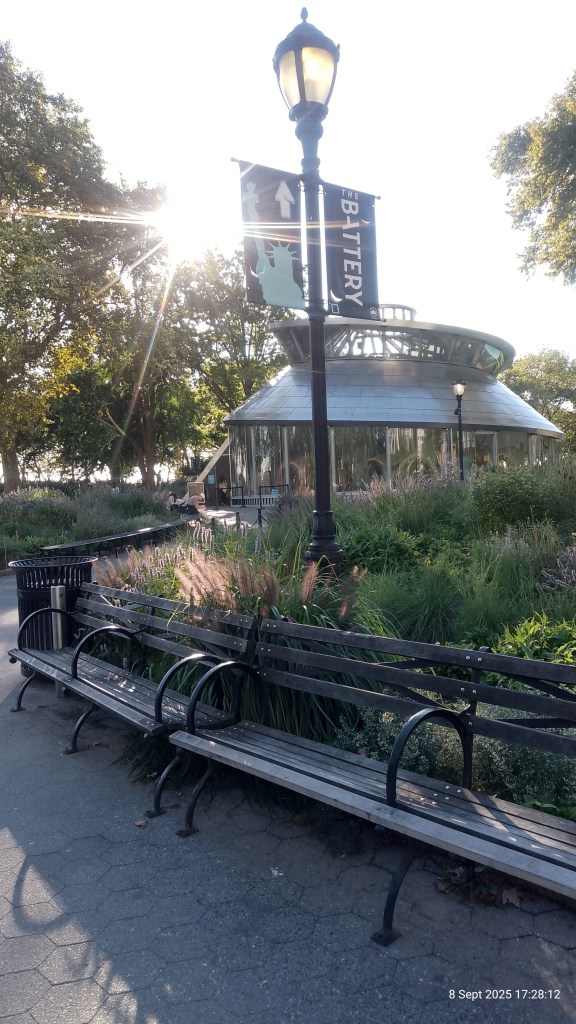
Th SeaGlass Carousel shown in the photograph below is one of the many restoration projects that have taken shape over the past few decades. The Carousel attracts many tourists and is a favourite with children. Resembling an under-the- sea ride, glowing fish take the places of the horses usually found on traditional Merry-go-rounds. The fish glow bioluminescent, adding to the fantasy of the under-water ride. Hurricane Sandy delayed the opening of the attraction in 1913 when the park was submerged in salt water, so officially opened in 1915.
The Bowling Green, also situated in The Battery is the oldest and one of the smallest parks in New York. Both the park and the fence surrounding it are listed. The cast iron fence around the park has survived since the 18th century and is a favourite photo opportunity for budding Instagramers.

But Did you Know?
In 1770 an equestrian statue of King George 111 was erected on the site of the Bowling Green. Made of lead, it stood there for only six years, when it was torn down by a group known as the Sons of Liberty after they got news of the Declaration of Independence which was read out in New York on 9th July, 1776. This very statue was subsequently melted down to make musket balls which were used in the American Revolution. So much for George 111, who you could say made a ‘balls-up’ of the struggle to keep America under British rule. The son’s of Liberty were probably the most active political group of the time and responsible for the Boston Tea Party (1773). As a protest about the tax on tea, they disguised themselves as Mohawk Indians and dumped pounds of British tea into the harbour at Boston.
Hello New Jersey
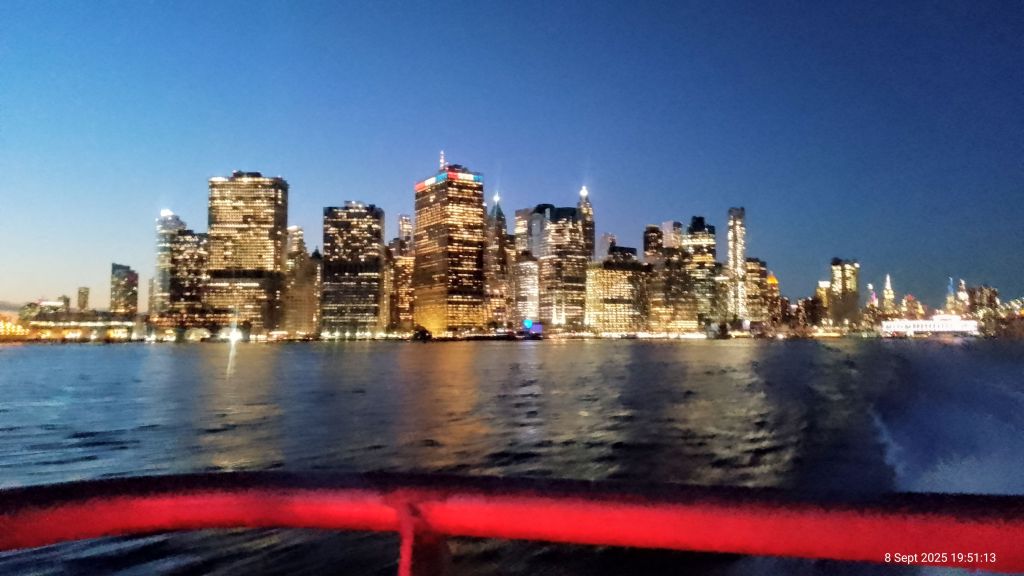
So we say goodbye to Manhattan for another day and catch the ferry back to New Jersey. If you ever want to make this ferry crossing, make it as the sun goes down. It is spectacular. With the moon rising over the horizon to our left and the sun setting pink and golden behind the Statue of Liberty. we gaze back at the city that never sleeps and the majestic skyline that is Manhattan Island.
The Mole People: Life in the Tunnels Beneath New York City, Jennifer Toth (1993) Audible release 15th October 2019. Tantor Audio
Terminal City, Linda Fairstein (2015) Dotton Publishers, Penguin Random House, New York
 shirleyjustwrites