In 1939, before a mostly white audience, a Black jazz singer took to the stage in a small basement nightclub and debuted a song that “…transformed jazz into something confrontational and political”. [1] That song was Strange Fruit, the nightclub was Cafe Society in the West Village, New York, the singer was Billie Holiday. She was 23 years old.
Written by Abel Meeropol under the pen name Lewis Allen, the song stemmed from a photograph Meeropol saw of a lynching. He originally wrote the song as a poem. After doing the rounds within activist circles it found its way to Cafe Society’s owner Barney Josephson, who passed it to Billie Holiday. A short time later the first words of the song drifted across the dimly lit smoke filled room:
Southern trees bear a strange fruit,
Blood on the leaves and blood at the root.
Black bodies swingin’ in the Southern breeze.
Strange fruit hangin’ from the poplar trees…
Holiday was already making a name for herself as a jazz singer when she debuted Strange Fruit. She understood the subversive nature of jazz music but she also understood that jazz was mostly associated with dancing and entertainment. Strange Fruit transformed it into something revolutionary: an explicit protest song. Holiday, with extraordinary bravery, sang a song that changed what popular music could say. And more importantly what American audiences could be asked to hear. The song is graphic in detail, the lyrics uncomfortable to listen to. Yet it became a commercial success.The question is, who would buy this song and why?
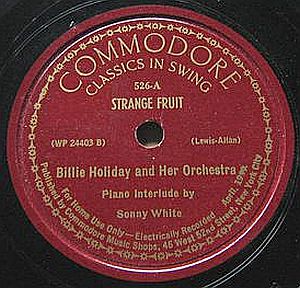
Recorded on the Commodore label on 20th April 1939 it rose to number 16 on the Billboard charts and remained there for 2 weeks. [2] Some sources put it as high as number 4. Given its content, why would America buy a record it didn’t want to hear? This contradiction became the story of Strange Fruit. We expect songs to entertain us, bring us together, rouse us, bring comfort, inspire us. Strange Fruit did none of these things. This was an era of Somewhere Over the Rainbow, and Glen Millar’s Little Brown Jug. Big Band music was the rage and young people were taking to the dance floor in droves. Music audiences, emerging from the Great Depression years, and on the brink of world war, demanded entertainment and it’s easy to see why. America was in social and political turmoil in 1939.
“Between 1882 and 1930 the number of lynching victims in the South totaled 2,805”. [3] and whilst there was a slow decline by 1939 the practice did not stop, continuing well into the 1960s and even into the 1980s. [4] In 1964 the murders of James Chanay, Michael Schwerner and Andrew Goodman became, according to the historian Phillip Dray the “ last classic lynching” in Mississippi. [5] In his 2002 book In the Hands of Persons Unknown, Dray notes that “Voices in a community might be raised against lynching, but most people were unlikely to speak out against it…none were willing to risk testifying against the guilty parties. [6]
Segregation also continued, enforced by Jim Crow Laws. These laws were mainly enforced in Southern states, developing after Reconstruction and remaining in place in a variety of forms until the 1960s. This meant separate seating on public transport and in public buildings, segregation in theatres and restaurants, complex voting rules, and crucially, racial segregation through local laws, particularly in housing. According to the Equal Justice Initiative: ”Senators, governors, judges, white ministers, and other figures boldly led the movement to maintain segregation through their words and deeds. [7]
By the late 1930s when Holiday first sang Strange Fruit, people were living in the shadow of a second world war. Fascism was on the rise with Hitler at the helm. Third Reich politics dominated international politics. The Spanish Civil War (1936 – 1939) led by right-wing Nationalist General Francisco Franco had just drawn to a close with Franco establishing a dictatorship that remained in place until 1975. [8] As National sentiment rose so did antisemitism. According to the Holocaust Encyclopaedia, during the depression era, as economic deprivation set in, the fear of communism, economic insecurity and opposition to immigration escalated, creating major anxiety and unrest that lasted well beyond the depression years. [9] The Mafia, having profited from Prohibition still had a strangle hold on many communities. Extortion was the order of the day. Much of the entertainment industry, particularly night clubs, were run by mobsters and racketeers. The Speak Easy clubs may have closed their doors, but organised crime still had its fingers in liquor supplies, the management and ownership of night clubs, prostitution, protection rackets, and illegal gambling. [10]
This was the social and economic backdrop in American towns and cities in the late 1930s. Yet, here was a protest song, a commercial success at a time when people were confronting economic deprivation, political unrest, antisemitism and racial discrimination. Even the film It’s a Wonderful Life initially bombed at movie theatres for being too depressing. Nevertheless this explicit protest song became Billie Holiday’s biggest selling hit. Who bought this record and why? Although anti-lynching campaigners were aware of the song’s presence, there is little evidence that it was bought in huge numbers by activists promoting anti-lynching campaigns, Therefore, as a protest song, could it be said it achieved anything? Did it raise awareness of the injustices done to those souls who were lynched?
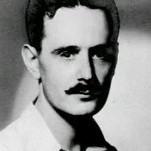
Abel Meeropol
The search for answers must begin with the people who prepared the ground for this extraordinary song to even see the light of day. Abel Meeropol was a song writer, poet, English teacher and social activist. He wrote under the pseudonym, Lewis Allen. He was white Jewish. Already disturbed by “on-gong racism in America” [11] he came across a photograph of the lynching of Thomas Shipp and Abram Smith in Indiana in 1930. He said the image “haunted him for days”. [12] He wrote a poem about that image, calling it Strange Fruit. Then he put it to music. As an aside, he subsequently became better known when he and his wife Anne adopted Ethel and Julius Rosenberg’s two children in 1957 after the couple were executed for espionage.
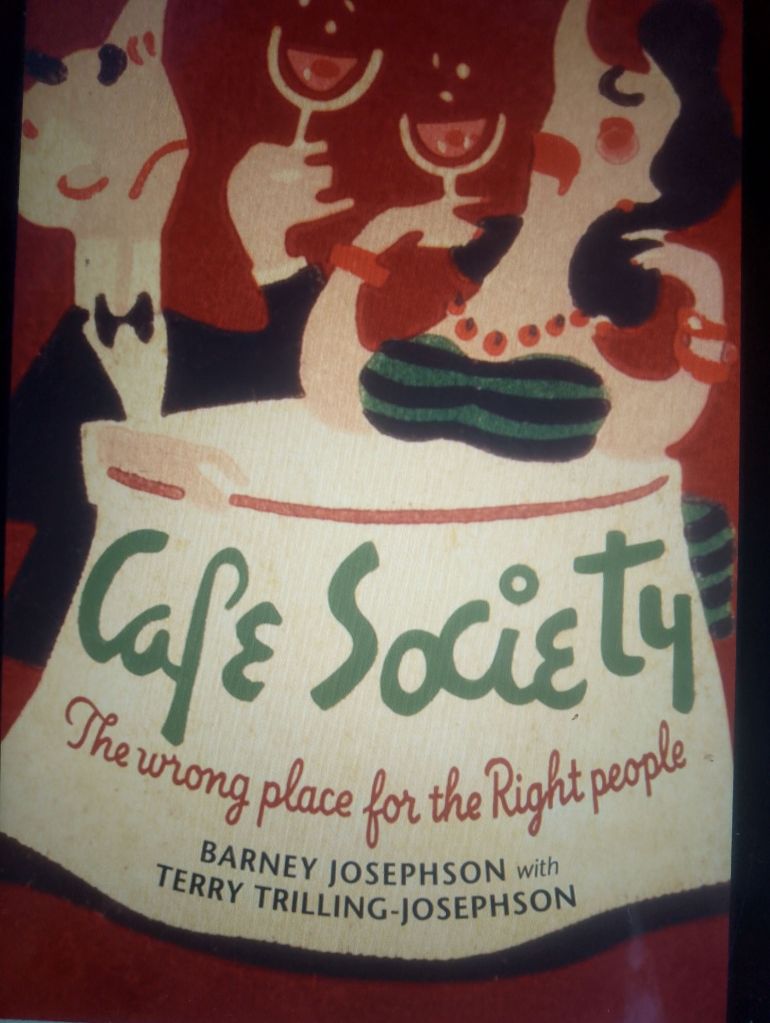
Barney Josephson (Cafe Society)
Meeropol’s Strange Fruit eventually found its way into the hands of one Barney Josephson, the owner of the recently opened Cafe Society in Greenwich Village, New York. Through his work as a shoe salesman Josephson travelled around the country, at the same time indulging in his love of jazz music. His rovings took him to many top jazz venues in America and Europe. He visited the Cotton Club in New York many times. This club, according to Josephson, alluded to the slaves working in the cotton fields in the South. [13] All the entertainers were Black. They were not allowed in the club as patrons. They had to enter through the kitchen and stay there until their performance. This angered Josephson. He also noted how many of the clubs appeared to be handled by organised crime bosses. He became obsessed with the idea of opening a night club where black and white audiences could sit together and black and white performers could work together behind the footlights. He said “my secret desire was to have a political cabaret such as I had seen in Europe”. [14] His club would not be financed by racketeers. He determined that his club would be open to all comers, black and white, his performers would be free to express themselves as they wished, and he would finance it himself.
Cafe Society opened in December 1938. Josephson was introduced to John Hammond, a journalist, who became his musical advisor/talent scout: the same John Hammond who was to become a Colombia Records executive and responsible for signing a young Bruce Springsteen in 1972. Josephson told Hammond he wanted black as well as white people as patrons. He also wanted fresh unknown talent, black and white, to perform at the club. Hammond was on to it immediately. Through his connections in the music industry, and Josephson’s business acumen, Cafe Society became the hottest spot in New York, known by its patrons as the right place for the wrong people.
Hammond introduced the young Billie Holiday to the club. Early the following year Meeropol’s song came into Josephson’s possession. The song had been doing the rounds in various activist quarters for some months. When Josephson read it, he wanted Billie to sing it at the club. [15]
Billie Holiday
Billie was born Eleanora Harris, to Sadie Harris an unmarried teenager, Her father was Clarence Holiday, a musician who played the banjo and the guitar. He was just a teenager himself when he became a father. He told Sadie he would support her but that he was too young to be married. On 7th April, 1915, Sadie gave birth to Eleonora. To begin with Eleanora was happy. Her mother had married and her step father was kind to her. By 1921 she had developed a love for jazz music. [16] This would lead her to change her name to Billie (after a movie star) and Holiday after her father. As time wore on Billie’s life became more turbulent and poverty-stricken as her mother repeatedly moved them from place to place. Eventually her mother moved them both to New York, and this is where Billie’s career finally began to take shape. [17] She began singing in Harlem clubs and recognition of her talent soon followed.
It was at Cafe Society that Barney Josephson asked her to sing Strange Fruit for the first time. He told Billie “this is the last song you sing [for the evening]. You’ve done your encores. Nothing can follow this song” This is how he set it up on that first night. All the lights in the club were switched off. Waiters could not serve food. The staff were told to freeze. Cashiers could not ring the tills, bartenders could not mix and serve drinks, The headwaiter was not allowed to seat anyone. No one was even allowed to strike a match. Josephson said he wanted the audience to hear every single word. [18]
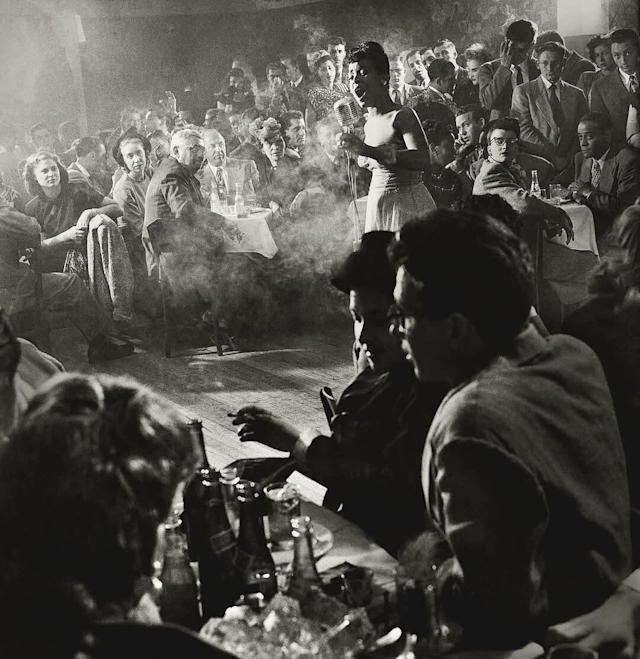
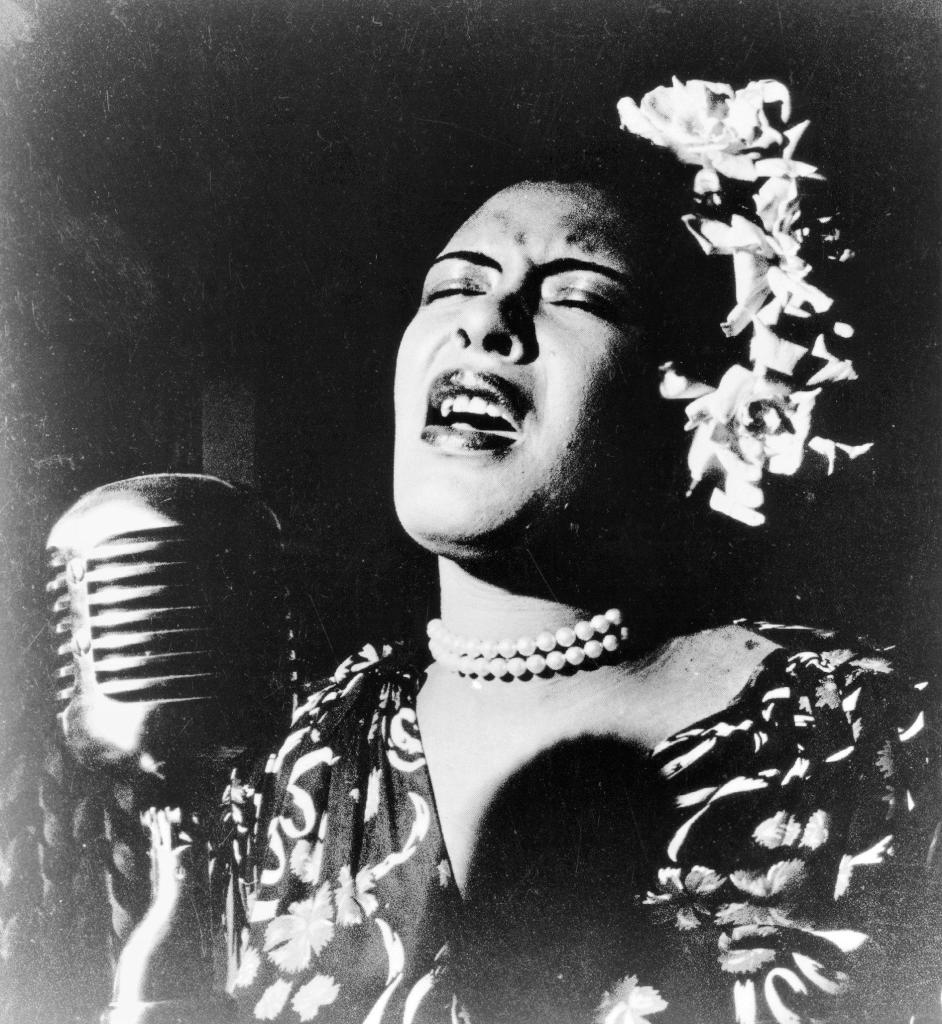
Billie Holiday performing at Cafe Society, 1939. Photographer/collection attribution: Frank Driggs Collection Institute of Jazz Studies, Rutgers University. John Hopkins University. aspace.library.jhu.edu
Billie is quoted as saying she was nervous about singing the song, even in a nightclub as progressive as Cafe Society. “There wasn’t even a patter of applause when I finished” she said, “then a lone person began to clap nervously. Then suddenly everyone began clapping”. Cafe Society loved the song and loved Billie Holiday. [19] Recorded on the Commodore label, the record went on to sell around 1 million copies, reaching number 16 on “22nd July, 1939” in the US charts. [20]
This is where things become really interesting. Who bought this record? The song was obviously controversial, Columbia would not touch it even though Billie was signed to them. John Hammond actively discouraged Columbia from recording it because he believed it would damage her career and it did to a certain degree at the time. Radio stations would not play it, music magazines would not promote it and Billie herself was lambasted for singing it.
Research indicates that the song was not banned so it’s not that a million people took to the streets to buy bootleg copies of the sheet music. Also there was certainly no real movement by civil rights activists to use the song as propaganda So who bought it? Did this song shape America? Did it even make an impact? Who actually heard Strange Fruit in 1939 and what did they hear?
Following the record
In the days before T.V and the internet, music fans got to know what records were on sale through the radio, newspapers, the sale of sheet music and music magazines. Music stores also advertised new records appearing in their stores. What also boosted sales of popular records was the growing interest in the juke box.
Billboard was a popular magazine at the time. Did it promote Strange Fruit? Archival research shows it did not. There is no evidence that it actively promoted Strange Fruit. However, it did list Strange Fruit on January 6th, 1940 as one of Commodore’s best-selling records of the previous year. [21] This is puzzling because the lack of radio exposure meant that the song would not have received coverage in Billboard who would have undoubtedly reviewed a song played on the radio.
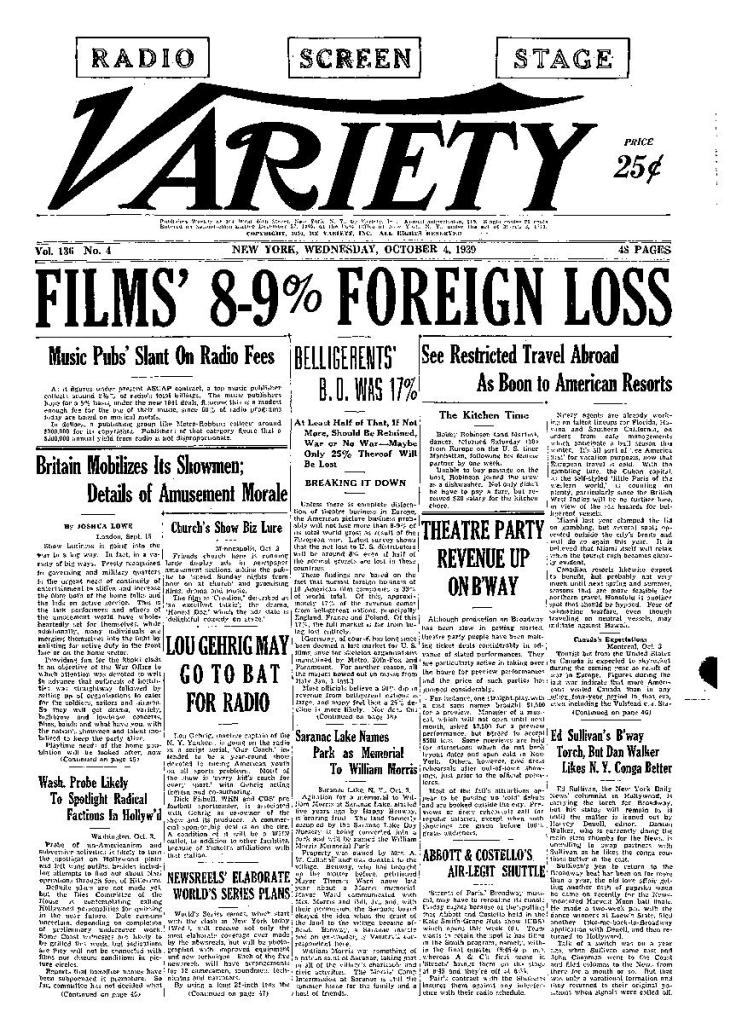
Variety Magazine did not promote the song either. Although it did review it. In the October edition, on page 207, the review showed up under the sub-heading of “Night Club Reviews: Cafe Society, N,Y. The reviewer said, “The ‘Fruit’ number…has an undefined appeal though it’s basically a depressing song”. [22]
So far then, there is little or no evidence as to why the song was a commercial success, although Variety did identify the song as explicit anti-lynching propaganda, which was something at least.
Samuel Grafton of the New York post said in October 1939: “This is about a phonograph record which has obsessed me for two day”…”He said it made him want to hit someone” He concluded: “If the anger of the exploited ever mounts high enough in the South, it now has its Marseillaise”. [23] This comment suggests that black communities in the South appeared to be quiet on the matter of Strange Fruit.
Paul Eduard Miller said in the July edition of Downbeat, “Not so good…a ballyhoo tune…gory wordage, hardly a melody” [24] However, The New Yorker did promote the song. Before the song was recorded by Commodore, an advertisement appeared saying “Have you heard? Strange Fruit growing on Southern trees, sung by Billie Holiday”. [25] Some Black Newspapers did promote the record. The Chicago Defender explicitly promoted the song using the term ‘propaganda’. At that time the word was used by journalists to expose lynchings. The Defender said on May 20th, 1939, “Billie Holiday Makes Record on Propaganda”. The use of the word implied that Strange Fruit should not be regarded as just another jazz song.[26] The Pittsburgh courier does not appear to have promoted the song at all.
A.B Houghtaling, in his essay about Billie, said “some young black students” didn’t like the song at all. They thought the song depicted Black people as victims. [27] David Margolick in his book Strange Fruit, said “The Associated Negro Press listed Strange Fruit among the notable records of 1939, but almost offhandly, as the flipside of Fine and Mellow. [28] Margolick goes on to cite Albert Murray, the blues and jazz historian as saying Southerners probably ignored the song. “You don’t celebrate New Year’s over chitlins and Champagne…who the hell wants to go hear something that reminds them of a lynching” [28] However, people were buying the record but listening to the flipside: Fine and Mellow. “A labour organizer from New York named Warren Morse”…played Fine and Mellow to his friends as a way of breaking them into Billie Holiday. [29]
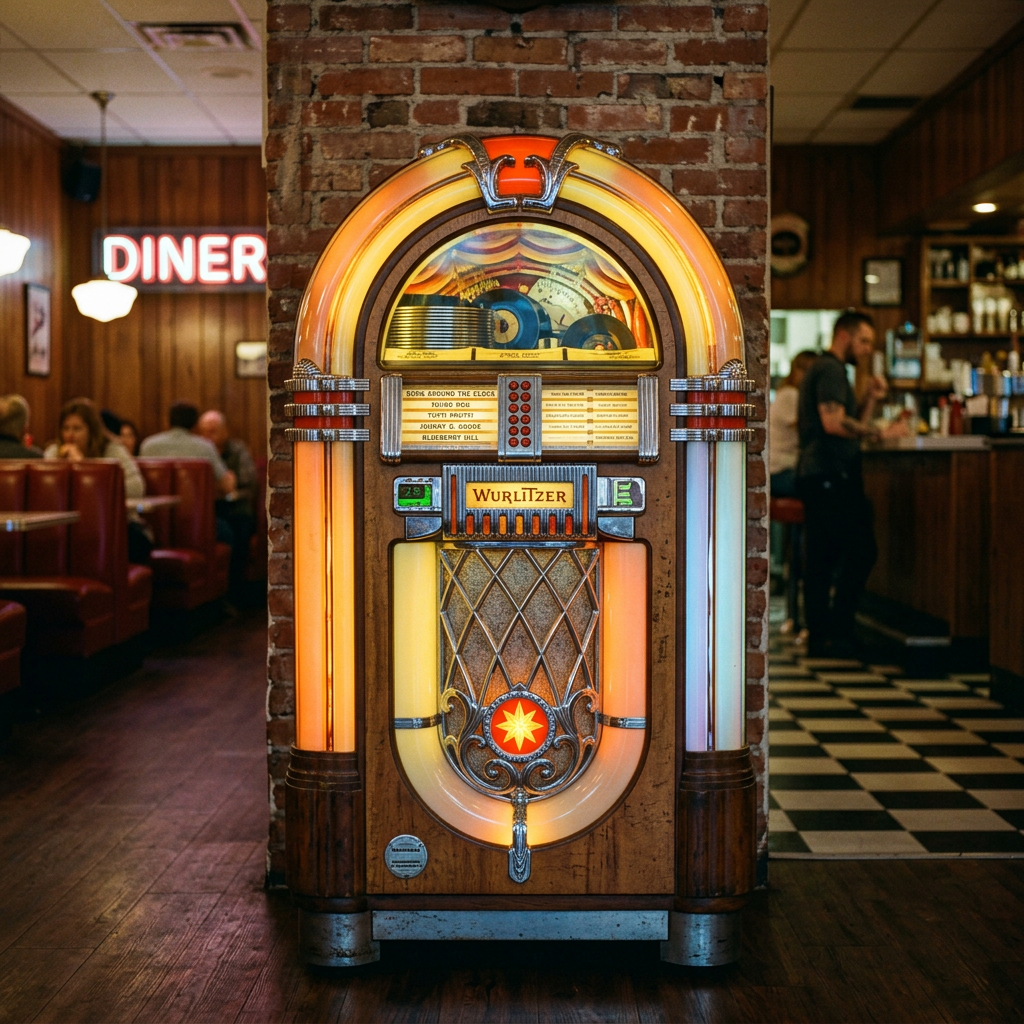
It seems then it was the B-side Fine and Mellow that people were listening to, Strange Fruit, not so much. People were nervous about the song. They were fearful it would agitate Black people, but they bought it because they wanted to hear Fine and Mellow. Billie already had a good following and jazz and blues audiences loved the B-side, making it a huge hit in its own right. If Strange Fruit was not promoted on the radio or in music magazines, how did people get to hear the B-side Fine and Mellow? This was almost certainly by way of the relatively new fangled music machine, the Jukebox.
Barney Josephson recalls in his autobiography that “some jukebox dealer from Chicago called Milt [Gabler] (record producer), [saying he] wants Fine and Mellow… The dealer takes all the records, puts them in his jukeboxes”. Suddenly, Fine and Mellow became the hit”. [30) But the record was not copyrighted, Meeropol was credited with Strange Fruit, but Fine and Mellow had no copyright. Gabler saw his chance and coupled the two songs together, making it a double-sided single. [31] He put Billie’s name on the copyright as composer of the words and music of Fine and Mellow. He knew America loved the jukebox and loved jazz. Gabler sold 50,000 records to jukebox dealers on the back of Fine and Mellow. He said he wanted Billie to make some money on the record. He knew Strange Fruit wouldn’t do it for her, but the B-side would. She received the royalties from this song for the rest of her life.[32]
Conclusion
Was Strange Fruit a turning point in history? Did it shape American society? Did it change anything? At the time, no. Many Black people thought it would create agitation, mostly people ignored it, and the white liberal voice was lost in the growing political and economic turmoil of the time. But Billie had a growing fan base, and Josephson insisted she sing the song every night at the club. It can be concluded from the circuitous route of Strange Fruit into the American psyche that American protest music does not shape people by telling them what to think. It shapes them by putting music into places where people will encounter it. In the case of Strange Fruit that was to be a nightclub, a record store, a 78pm record and a jukebox. People did listen to Strange Fruit, even if they did not like it, or even if they did not actively go looking for the song. However political and explicitly controversial this song was at the time, America couldn’t completely stop people listening to it. Time put photographs of Billie in their magazine because of Strange Fruit, thus making it possible for the first time, for black artists to be seen as well as heard in music magazines and newspapers. Significantly, it shaped the way people were prepared to listen to music. That was the turning point. The song found places where a seed could be planted, a seed that would blossom into one of the finest anthems the 1960s Civil Rights Movement could possibly have. It finally found its Marseilles. By the 1960s people were prepared to listen.The song went on to be sung by Nina Simone, Frank Sinatra and Amy Winehouse and was used in the film Birth of A Nation. Billie Holiday did not live to witness the impact her song would have on the Civil Rights Movement. She would have been proud.
1. boweryboyshistory.com/2021/03/friday-night-fever-com [Th Story of Cafe Society where Billie Holiday found her song -The Bowery Boys: New York City History]
2. Billie Holiday’s “Strange Fruit” (1939) | Smithsonian Music
3.https://dh2018.adho.org/en/monroe-work-today-unearthing-the-geography-of-us-lynching-violence/ [statistics on lynching 1883 – 1930]
4.https://www.scencyclopedia.org/sce/entries/lynching/
5.https://freshairarchive.org/segments/author-philip-dray
6. At the Hands of Persons Unknown, Dray.P. (2002), New York, The Modern Library
7. https://segregationinamerica.eji.org/ Segregation in America
8. https://encyclopedia.ushmm.org/tags/en/tag/spanish-civil-war
Spanish Civil War
9. https://encyclopedia.ushmm.org/en [Anti-semitism]
10. boweryboyshistory.com/2021/0 3/friday-night-fever-com [Th Story of Cafe Society where Billie Holiday found her song -The Bowery Boys: New York City History]
11. https://www.billboard.com/artist/billie-holiday/ Billie Holiday
12.The Eye of the Storm and Light Verse for the Heavy Heart, Lewis. A, (1969) Hastings on Hudson, NY: Peter Piper Press [cited in] https://www.encyclopedia.com/social-sciences/encyclopedias-almanacs-transcripts-and-maps/strange-fruit
13.Cafe Society: The Wrong Place for the Right People, Barney Josephson with Terry Trilling-Josephson, (2009) Chicago, Illinois Press
14. Ibid. p.9.
15. Ibid.
16. Willow, Weep For Me: The Life of Billie Holiday, Nigel Barnes (2019) Amazon Kindle Edition.
17. Cafe Society: The Wrong Place for the Right People, Barney Josephson with Terry Trilling-Josephson, (2009) Chicago, Illinois Press
18. https://davesmusicdatabas.blogspot.com Daves Music Database July.
19.https://en.wikipedia.org/wiki/1939_in_music?utm_sources=chatgpt.com Number in Billboard charts.
20. Ibid.
21. Kraemer-Thesis. A song about Resistance Kraemer, L. (2019) The Pennsylvania State University, Schreyner Honors College.
22. https://archive.org/details/variety136-1939-10/mode/2up?q=Fruit
[Variety Magazine October 1939, Volume 136, page n207.
23. Strange Fruit: Billy Holiday, Cafe Society, and an Early Cry for Civil Rights, Margolick, D, (2000), Philadelphia, Canongate. Digital edition,(20013) London, Canongate Books (p.67)
24. worldradiohistory.com Caught in the Act, Freddie Hubbard
25.https://www.talkingpeople.net/tp/audio/music/holiday/billieholiday_strangefruit.html Talking People
26.https://www.talkingpeople.net/tp/audio/music/holiday/billieholiday_strangefruit.html Talking People
27.. Kraemer-Thesis. A song about Resistance Kraemer, L. (2019) The Pennsylvania State University, Schreyner Honors College.
24.https://deepblue.lib.umich.edu/bitstream/handle/2027.42/117877/Ornstein.pdf? Cindy Ormstein: Rallying Cry: Songs of Social Change. (2013)
25. worldradiohistory.com Caught in the Act, Freddie Hubbard
26.https://www.talkingpeople.net/tp/audio/music/holiday/billieholiday_strangefruit.html Talking People
27. Strange Fruit – Billie Holiday (1939), Julie Blackburn, Library of Congress 170. [added to Library in 2002]
28. Strange Fruit: Billy Holiday, Cafe Society, and an Early Cry for Civil Rights, Margolick, D, (2000), Philadelphia, Canongate. Digital edition,(20013) London, Canongate Books (p.67)
29.https://www.abhoughtaling.com/writing/this-will-end-in-tears/billie-holiday-strange-fruit Billie Holiday “Strange Fruit” Adam Brent Houghtaling
30. Cafe Society: The Wrong Place for the Right People, Barney Josephson with Terry Trilling-Josephson, (2009) Chicago, Illinois Pre
31. Ibid (p.42)
32. Ibid (p.52)


Very interesting, a great example of the underestimated power of subliminal thought. But it has to be said a shocking time in American history and makes uncomfortable reading.
LikeLike